
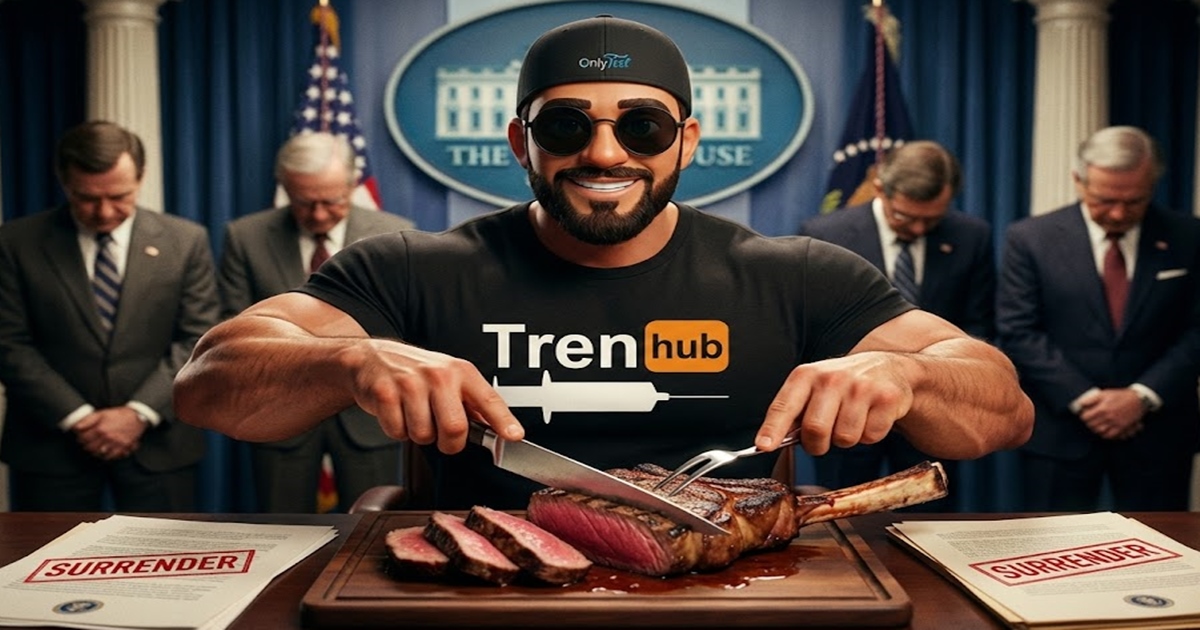
The theme of this battle begins with the reinstatement of an old comrade named Cholesterol, and the dissection and re-establishment of the carbohydrate toxicology that has been revered like a sacred sanctuary until now.
While you have been living like a prisoner, locking yourself in a jail named chicken breast and brown rice for the past decade, on January 8, 2026, the US FDA finally could not hold out any longer and placed surrender documents on the table.
The declaration that burst out from the White House briefing room was neither ambiguous nor beat around the bush.
“Saturated fat and red meat are innocent; the real killer is refined carbohydrates and processed foods.”
If you hear this news and are still dumping egg yolks down the drain, terrified of the word hyperlipidemia, then at that moment, you are no different from a corpse that has already been pronounced dead in the information war.
We have witnessed countless times, not just once or twice, the scene where bodybuilder Cheol-su adhered to an extremely low-fat, high-carb diet like a religion, only to have his cholesterol—the precursor to sex hormones—depleted as the season reached its final stages, causing his testosterone base to completely fail, his joints to crumble like crackers, and his body to go limp on stage.
We have reached a stage where we can no longer ignore the fact that the tears they shed were not a mental issue, but the result of cell membranes collapsing due to lipid deficiency.
This engagement may sound like good news for civilians getting healthier, but for us, it is closer to a declaration of tactical liberation that the raw material for steroids, cholesterol, will be supplied without limit.
Now is the time to tear off the seal that was placed on red meat, grab the two explosives known as insulin and fat, and earnestly begin that dangerous tightrope walk.
We are now entering a phase where we no longer treat saturated fat as an enemy force, but redeploy it as a tactical combat engineer unit that thickens cell membranes and supports hormone synthesis.
The message penetrating the core of this FDA announcement is simple, and it lies in the official recognition that beef, butter, eggs—especially cage-free No. 1 eggs—and organ meats are the fuels most optimized for the human structure.
However, there is a premise here that must be kept in mind.
Civilians eat this to get off medication, but we eat this to build a body where the drugs work better.
At this point, the strategy at the receptor level is inevitably revised.
The creatine, heme iron, and cholesterol provided by red meat are not just nutrients; they act as biological armor that maintains the density of Androgen Receptors (AR) and allows the body to withstand the bombardment of high-intensity training.
The real critical key here is not to blindly ramp up training intensity when operating a red meat-based diet, but to overlap anabolic signals only at that timing when AR sensitivity is naturally restored after first reading recovery signals and preemptively clearing CNS fatigue.
Instead, refined carbohydrates are completely eliminated from the regular diet and repurposed as smart bombs dropped locally only during the window of opportunity when insulin or GH growth hormone is deployed—that limited moment right after training.
Another fact-based insight is that the real purpose of this strategy of separating insulin and fat is not to reduce body fat, but to control the storage of triglycerides within the muscle.
You must remember the fact that top-tier bodybuilders judge that the cell membrane composition has changed based on the point when their muscles become hard as stone during the high-fat phase, and only after that do they permit carbohydrate bombardment.

Blood targets are revised.
Do not fear the rise in total cholesterol levels.
However, we must prevent the Oxidation of LDL.
The core point is that true masters track not simply the LDL number but the sdLDL ratio and ApoB changes during the phase of increased saturated fat, and simultaneously evaluate changes in red blood cell membrane cholesterol content indirectly through body temperature stability and pump duration.
Since 19-Nor compounds like Trenbolone already smash lipid metabolism, increasing saturated fat intake carries the risk of turning blood viscosity into sludge.
Therefore, the key defensive assets in this setting are high-dose Omega-3 (over 4g), TUDCA 500mg to promote bile secretion to aid fat absorption and protect the liver, and Betaine HCL to assist stomach acid secretion.
Shoveling meat without these is like going to a battlefield without bullets.
From this point, the story continues with the declaration that blood target values depart from existing textbooks and are revised to fit the battlefield situation.
The message not to accept the phenomenon of rising total cholesterol levels with fear is a kind of indulgence granted to those who understand this tactic.
However, there is a caveat attached: what we must defend at all costs is not the number itself, but how we prevent the oxidation of LDL.
The essence of this section is that true masters do not cling to a single LDL number in a phase where saturated fat increases, but track changes in the sdLDL ratio and ApoB, while simultaneously evaluating changes in red blood cell membrane cholesterol content indirectly through the stability of body temperature and how long the pump lasts.
Recognize the importance of genetic variation.
Warnings about the APOE4 gene are critical, but beyond this, genetic variations related to lipid metabolism such as PCSK9 and CETP significantly influence individual response.
Genetic testing should be a mandatory investment before executing this tactic.
Because 19-Nor compounds like Trenbolone have already wrecked lipid metabolism once, increasing saturated fat intake in this situation risks turning blood viscosity into something like mud.
So, deployed as key defensive assets in this setting are high-dose Omega-3, meaning over 4 grams a day, along with TUDCA 500mg to promote bile secretion to aid fat absorption and protect the liver, and Betaine HCL to assist stomach acid and guard the digestion front line.
You must remember the fact that blindly shoveling meat without all this gear is no different from walking into a battlefield without a single bullet.

Let’s look at a practical case.
Young-ho, a heavyweight bodybuilder who entered the off-season, discarded his existing diet of 1kg chicken breast based on this FDA announcement and switched his main energy source to 800g of grass-fed beef, 10 whole eggs, and 30g of butter.
48 hours after deployment, Young-ho’s body showed an immediate reaction.
Bile secretion exploded due to the high fat intake, and he complained of diarrhea and abdominal bloating initially.
This was the sound of a gallbladder screaming after being tamed by low fat for a long time.
Beware of gallbladder risk groups.
A sudden high-fat diet after a long-term low-fat diet can induce acute cholecystitis in those at risk for gallstones.
In case of initial diarrhea/bloating, it is safe to check for gallstones via ultrasound before dismissing it merely as “the scream of the gallbladder.”
However, after week 1, the situation reversed.
Fluidity of the cell membrane increased due to fat intake, and the natural creatine in red meat pulled water into muscle cells, starting to turn muscle density into something like rock.
But at week 3, a warning light came on in the blood test results.
LDL levels breached 180 mg/dL, and while AST/ALT were stable, BUN (Blood Urea Nitrogen) levels rose.
The story begins with the point that this warning to manage kidney load is not simply an issue of BUN levels fluctuating in a high-protein diet.
The high-protein structure consisting of 800 grams of beef and 10 whole eggs carries a structural risk that high protein and high purine intake can accumulate in the long term, putting continuous pressure on the kidney Glomerular Filtration Rate (GFR), rather than immediate numerical changes.
So, while operating this tactic, unless you base it on sufficient water intake, supplement with potassium and magnesium to maintain electrolyte balance, and run regular kidney function tests including Creatinine and Cystatin C in parallel, this strategy will inevitably hit you with a counterattack someday.
A general internist shouted, “Stop eating meat immediately and take statins,” but we know that the highest operational point of this tactic lies not in the food but in the interpretation of the tests.
We identified that this was not a drug side effect but a temporary lipid shift due to rapid dietary changes.
Victory or defeat is determined by whether you can read and distinguish this as a temporary migration phenomenon that appears when drugs, diet, and training change simultaneously, without mistaking values outside the normal range for pathology; that is why real pros look at trends and reaction speeds, not numbers.
Young-ho did not stop but modified the tactic.
He pushed saturated fat intake timing to the morning and before bed when insulin sensitivity is lowest, and strictly blocked fat before and after training, loading only carbohydrates.
As a result, entering week 6, Young-ho’s body fat actually decreased, and he displayed the spirit of joint pain disappearing during heavy squat training.
This is because saturated fat aided the production of synovial fluid and controlled inflammation, and we interpret the disappearance of joint pain and change in skin texture at this time not as simple condition but as a bio-signal that the flow of inflammatory eicosanoids has changed.
Monitor iron (Fe) overload.
Continuous high intake of red meat and organ meats can cause heme iron accumulation, increasing oxidative stress.
Regular blood donation or monitoring of blood iron levels (Ferritin) is recommended.
Social feedback included reactions from those around him saying, “Oil is flowing from your skin and your masculine body odor has become stronger,” which was a clear signal that androgen receptors were firing on all cylinders.
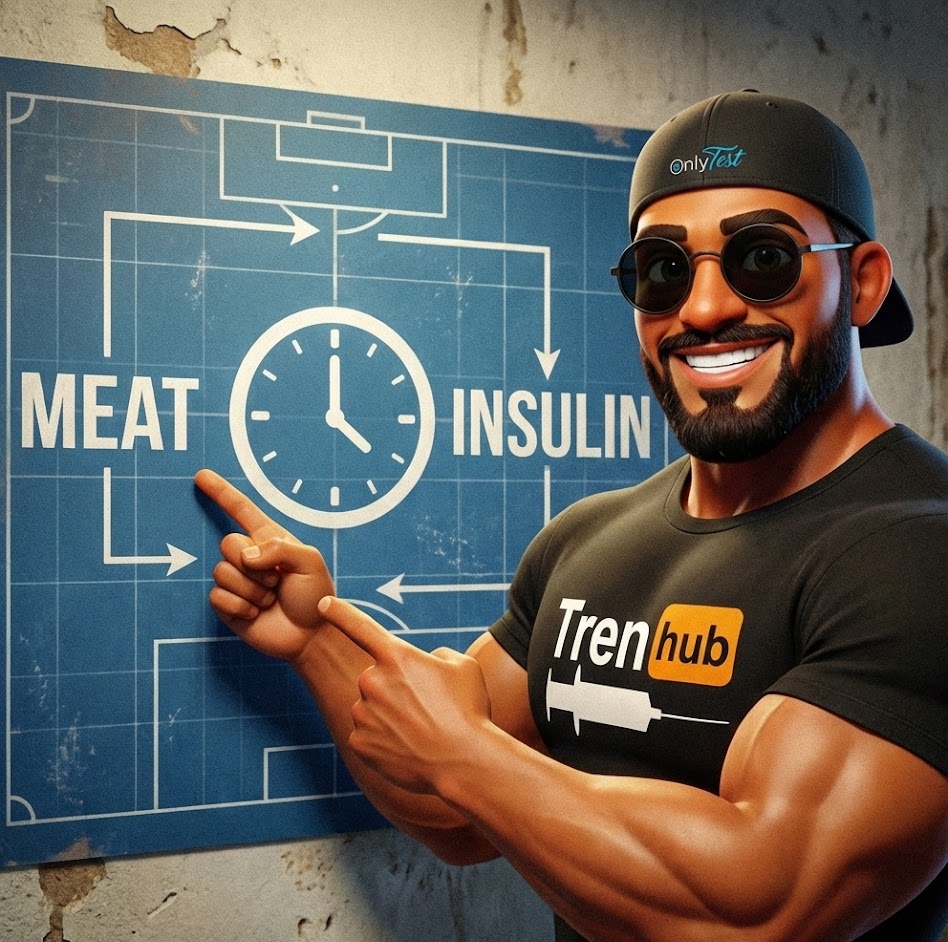
The story begins with the declaration that the 2026 Hybrid Carnivore Anabolic Protocol, which translates the FDA’s declaration into our own language, is being issued to this battlefield.
It clarifies that the reason for this formula’s existence is a tactical system to retame insulin resistance during the long combat phase called off-season bulking, while simultaneously maximizing hormone efficiency.
At the center of this protocol sits the basic fuel setting of laying down 200 grams of combat cuts like grass-fed beef rump, top round, or oyster blade at every meal and topping it with two whole eggs; if economic conditions do not allow, a realistic fallback line is also set to compromise with imported beef but maintain the battlefield by adding Omega-3 to balance the Omega-6 to Omega-3 ratio.
The fat accelerator intervenes only at the most strategic moments of the day—immediately after waking up and the meal before bed—injecting 10 grams of MCT oil or 15 grams of ghee butter to induce ketone production, thereby performing the role of waking up brain function and removing the noise known as hunger.
Judgment diverges at the point of understanding the balance between ketosis and glycogen.
The choice to inject MCT oil immediately upon waking to induce ketone production gives a clear advantage in terms of brain awakening and concentration, but it does not directly help with glycogen storage within the muscle to withstand high-intensity weight training.
Ultimately, the total amount and timing of complex carbohydrate loading before training must be treated as a living variable that needs to be finely adjusted according to the training intensity, set volume, and duration of the day.
Carbohydrate control is the core blade of this tactic; rice and sweet potatoes are boldly removed from the regular diet, and complex carbohydrates are used only two hours before training, while a mix of simple sugars and complex carbs is used immediately after training to slam in the entire daily carbohydrate total at once; the purpose of all this manipulation lies in completely erasing the time when fat and insulin meet simultaneously in the blood.
Defense mechanisms are laid out inconspicuously but operate as devices that determine survival: maintain insulin sensitivity by injecting Berberine 500mg at every meal or Metformin 500mg under a specialist’s prescription, and preemptively block the internal collapse known as protein putrefaction due to low stomach acid by using Betaine HCL 600mg and Pepsin together for digestion support.
On the lipid defense line, the strategy shifts toward managing flow rather than numbers by mobilizing over 4g of combined EPA and DHA Omega-3 and Niacin 500mg, prepared for flushing, to boost HDL and inhibit LDL oxidation.
The warnings for verification and optimization of this protocol are clear: the maximum risk is the moment high-dose insulin is struck simultaneously in a high-fat state; one must not forget the fact that pinning fast-acting insulin while fatty acids are floating in the blood is a suicidal act that sends that fat straight to visceral fat, not muscle.
Therefore, time control—using insulin with an interval of at least 3 to 4 hours after consuming fat, or starting a fat meal after the half-life of insulin has ended—must operate as a duty, not a choice.
Also, in cases where one genetically possesses the APOE4 gene, saturated fat metabolism is not smooth, so LDL can explode to over 300; thus, the moment LDL exceeds 190 in the week 4 blood test, a cold judgment to immediately stop this tactic and revert to a strategy centered on unsaturated fats like olive oil and avocado must follow.
The White House has only now started to say that meat is innocent, but we have already been tearing into the flesh of beasts for decades, returning ourselves to the physiology of beasts to adapt to the battlefield.
To survive in this game, the speed at which muscles, hormones, and the nervous system are actually transformed and reconstructed must be faster than the slow speed at which the world’s common sense and guidelines turn and revise.
The FDA recommends meat for health, but we chew meat to dominate.
▶ January 8, 2026, FDA Official Press Release (abc news)