
Stop the weak talk about overtraining.
What you’re experiencing right now isn’t training excess.
It’s the final distress signal from a system screaming on the verge of total collapse.
Those who crawl to the point of failure babbling about “do or die” will only end up foaming at the mouth in a gym corner, not on stage on competition day.
This isn’t a battle of willpower.
It is a clear defeat in chemical warfare.
The signals your body sends aren’t some mere hints to ponder over.
They are red alerts that your entire system is melting down.
The body is a battlefield.
Cortisol is a biochemical weapon deployed by the enemy; sleep is the time to repair destroyed allied units and resume supplies; and the central nervous system (CNS) is the command and control center overseeing it all.
Talk of eight-week training blocks is just self-justification for amateurs who rely on calendars.
Recovery is not standardized; it is strictly individualized.
An eight-week block approach is merely a guide for beginners.
Pros design their recovery cycles based on their own biological clocks, hormonal rhythms, and sleep patterns.

A pro’s data monitoring system goes beyond heart rate variability (HRV).
It requires nocturnal biosignal pattern analysis—specifically, monitoring heart rate variability and perspiration rates during sleep.
Beyond simple blood tests for electrolyte balance and metabolic panels, blood gas analysis and metabolite profiling are required.
Neuromuscular fatigue measurement through EMG analysis of specific muscle groups is necessary to track micro-fatigue.
Track HRV, morning basal heart rate, and sleep quality daily, and execute deloading the moment it becomes necessary, not according to a predetermined schedule.
The real battlefield moves in units of blood data, not timetables.
Check your HRV as soon as you wake up every morning.
This isn’t about gutting it out; it’s the process of verifying the command center’s fatigue levels through numbers.
If HRV values plummet for three consecutive days, that’s an order from headquarters to prepare for a full withdrawal, regardless of your will.
Think about why Milos Sarcev checks his athletes’ blood data weekly and revises entire cycles.
The era of guessing by feel ended twenty years ago.

Supplements like Ashwagandha KSM-66 or Phosphatidylserine are just smokescreens that briefly mask the cortisol air raid.
They get torn like paper in the face of total systemic overload.
Top-tier bodybuilders work with endocrinologists, using blood results to reboot the HPA axis with prescription drugs like Metyrapone.
This is not a stage that can be clumsily imitated.
It is merely an emergency protocol to force a system restart through external medical intervention when the final defensive line of chemical warfare has collapsed.
A pro’s chemical warfare consists of multiple layers.
Precise timing adjustments for GH/Insulin synergy protocols are required to accelerate recovery.
Targeted regeneration occurs through localized growth factor therapy, injecting IGF-1 LR3 into specific sites.
Neurotransmitter precision tuning involves a serotonin-dopamine balancing system more sophisticated than simple MAOIs.
Deloading is not just rest.
Carve it into your bones: it is the most aggressive retreat tactic to reorganize your ranks and prepare a counterattack when the enemy’s offensive is at its peak.
Make micro-recovery a habit and integrate it into the daily routine of war.
Pro micro-recovery extends to the intravenous level.
IV nutrition therapy includes direct intravenous infusion of Glutamine and BCAAs.
Amino acid combination strategies are executed to optimize GH secretion through specific amino acid ratios.
Gut environment management is achieved through microbiome adjustment with custom probiotics.
Don’t just obsess over deloading cycles; daily recovery routines make the system sustainable.
Within thirty minutes post-workout, supplement with high-glycemic carbohydrates and fast-digesting protein.
If you trained in the evening, block blue light two hours before bed and take a cool shower to
lower core temperature to suppress CNS arousal.
This also includes five minutes of box breathing meditation to immediately activate the parasympathetic nervous system and calm cortisol spikes.
The first signal is the total destruction of sleep circuits.
The pineal gland, which used to shut the melatonin shutters at 10 PM, loses its function.
A self-inflicted chronic cortisol storm has violated the Hypothalamic-Pituitary-Adrenal (HPA) axis, shattering the circadian rhythm.
At night, the sympathetic nervous system declares martial law, leaving you wide-eyed, while during the day, your adrenals are drained, leaving you craving power naps like a corpse.
It’s not just insomnia.
It’s evidence that nighttime GH secretion pulses have vanished, muscle glycogen resynthesis lines are paralyzed, and systemic inflammation is spreading uncontrollably.
Blood data from bodybuilders on the brink shows nocturnal cortisol levels exceeding the morning levels of a normal person.
This doesn’t just mean you can’t sleep; it means your body has entered a self-destruction mode, attacking itself twenty-four hours a day.
The second signal is the total depletion of neurotransmitters.
If you feel the urge to rip out the salivary glands of someone chewing loudly next to you—even without a drop of Trenbolone—it’s not a personality flaw.
It’s the result of haywire catecholamines (adrenaline and norepinephrine) physically burning out the control circuits of the prefrontal cortex responsible for reason.
The dopamine system’s reward circuit collapses, meaning you no longer find pleasure in training, while serotonin hits rock bottom, losing even the minimum emotional stability.
This state is a total systemic collapse of a different dimension than the irritability caused by high-dose Testosterone or Primobolan.
You haven’t just become tired; you’ve morphed into a chemically broken offensive unit.
Pro-level nervous system repair demands pharmacological precision.
CNS recovery protocols require the cross-utilization of Modafinil-class cognitive enhancers and GABAergic sedatives.
Compounds to promote BDNF (Brain-Derived Neurotrophic Factor) secretion are introduced to support neuroplasticity.
Strategic rest is designed for receptor sensitivity readjustment and dopamine receptor up-regulation.
This is why chemical strategists like Chad Nicholls obsessively monitor their athletes’ psychological states.
The moment he judges the neurotransmitter balance is broken, he prioritizes serotonin system restoration using MAOI-class drugs over training.
This is not psychiatric treatment; it is clearly a part of the cycle.
The third signal is the forced shutdown of the central control system.
The thirst for iron, which you couldn’t live without until yesterday, evaporates like a lie.
This isn’t a weakening of will; it’s the CNS shutting off the power itself.
Due to repeated overload, dopamine receptors are down-regulated, and endorphin secretion no longer functions as a reward.
This is the body’s final warning: stop now, or self-destruct.
The impatience from the body in the mirror not yet reaching its goal is meaningless.
The moment the command center turns off, the war ends then and there.
The fourth signal is a fatal crack in structural integrity.
The creaking sounds from your elbows, shoulders, and knees aren’t just common aches.
They are alarms reminding you of the cold reality that connective tissues—tendons and ligaments—adapt about five times slower than muscle.
As muscle mass and the weights used increase, the structural strength of tendons and ligaments inevitably lags behind.
Seasoned pros don’t ignore this; they track tendon thickness and structure with regular ultrasound imaging as a preventive measure, gradually increase tendon load capacity through static training like isometrics, and periodically use selective androgens such as Deca (Nandrolone) at low doses for connective tissue strengthening under medical supervision.
A pro’s connective tissue management system is as follows:
BPC-157 + TB-500 + PRP synergy protocol: combination therapy, rather than single treatment, is required.
HGH Fragment 176-191: simultaneous achievement of fat loss and connective tissue strengthening.
Stem cell precision therapy: targeted regenerative treatment, rather than simple injection.
The problem arises where the rate of muscle fiber destruction cannot be matched by the rate of collagen synthesis, and this is a warning chime that the durability of the entire structure known as the body is collapsing.
This stage is not something that can be endured with warm-ups or elbow sleeves.
If recovery is delayed even with daily injections of 500 mcg of BPC-157 and 1 mg of TB-500 into specific
localized areas, it should be seen as the prelude to a total combat defeat rather than just localized damage.
Top-tier pros receive regular PRP (Platelet-Rich Plasma) injections to repair damaged tendons and ligaments or even choose stem cell therapy.
The knees of Mr. Olympia champion Hadi Choopan are also the result of reconstruction through multiple stem cell procedures.
They accept medical intervention as a natural choice to repair, rather than just manage, micro-damage.
The moment you ignore that pain and push for just one more rep, your muscle can be torn like a tattered rag.
Ultimately, designing a cycle for long-term sustainability must be the final goal.
Maintaining a career over ten or twenty years is the true pro victory, rather than short-term peak performance.
The framework pros use when designing long-term cycles is structured as follows:
Level 1 is the micro-recovery stage, including daily breathing meditation, sleep optimization, nutrient timing management, IV nutrition support, and amino acid profiling.
Level 2 is the tactical recovery stage, adjusting CNS load and training volume on a weekly basis, fine-tuning drug cycles, and continuously monitoring blood data.
Level 3 is the strategic recovery stage, conducted monthly or quarterly, featuring partial HPA axis resets, intensive connective tissue treatment, endocrine recalibration, and checks on overall organ function.
Level 4 is the season recovery stage, aiming for a total system overhaul within the annual schedule, designed to include a drug clearance period of 4 to 6 weeks and recovery of baseline health status.
To this end, design the annual training load curve in advance, focus on functional movement patterns like mobility and muscle imbalance correction during the off-season, and continuously monitor the endocrine system and liver/kidney function through blood tests.
Furthermore, a strategy is needed to include a 2- to 4-week intentional complete off-season—a total rest period—within the annual schedule to fundamentally reset the HPA axis.
A pro’s complete off-season assumes a reset at the level of redesigned the entire drug cycle.
The androgen system is also a target for initialization, and the timing of when and how to introduce long-acting testosterones like Oral Test and C.O.P must be redesigned.
Simultaneously, insulin sensitivity enters the reprogramming phase, and metabolic pathways are realigned using GLP-1 agonists.
Added to this is a structure that fundamentally restores the Hypothalamic-Pituitary-Adrenal axis by placing a 4- to 6-week complete rest aiming for long-term HPA axis regeneration.
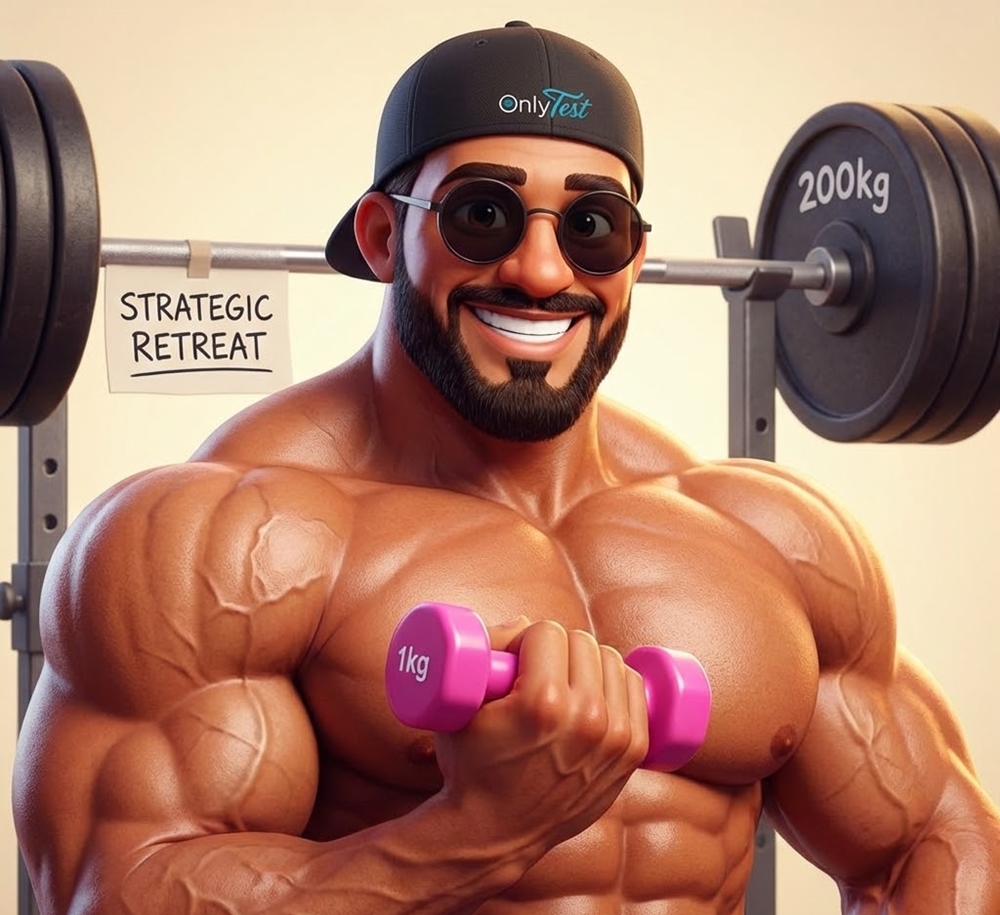
In the tactical retreat protocol for survival, the first tactic is the half-firepower retreat.
Perform all training with 50 percent of the weight you have been using.
If you were squatting 200 kg, you must lift 100 kg.
This is not for the purpose of resting the muscle.
It is a deceptive maneuver to trick the nervous system.
Maintain the same movement pattern to keep blood flow alive and glycogen supply lines open, while fundamentally blocking CNS overload and micro-tears in muscle fibers.
The concept of a failure point does not exist in this protocol.
This is not training; it is a system reboot procedure to prepare for the next offensive.
The second tactic is half-rate fire control.
Keep the weight as it is and reduce only the number of repetitions to below 50 percent.
If it was a weight you did 8 reps with, perform only 3 or 4 reps.
This method is a surgical strike tactic that maintains neural recruitment patterns for maximum weight while minimizing metabolic stress and cortisol secretion.
Apply this to weak points where maintaining weight is essential, such as the back or lower body.
Organize the imbalance of the battlefield by alternating half-firepower retreat for strong points and half-rate fire control for weak points.
The final tactic is an expanded version of the full withdrawal protocol.
Completely ban entry to the gym for one week.
This is not a surrender.
It is a strategic retreat for resupply and battlefield redesign.
A pro’s choice of full withdrawal is different from simple rest.
An insulin sensitivity recovery protocol requires realigning metabolic pathways using GLP-1 agonists, and the drug cycle is also rearranged by rescheduling the introduction of long-acting compounds.
Simultaneously, a 4- to 6-week complete rest aiming for long-term HPA axis regeneration is placed to fundamentally reset the overall system.
During this period, force cortisol levels back to normal, restore the function of the HPA axis, and refill depleted neurotransmitters.
True pros utilize this time as a golden period to dramatically restore insulin sensitivity.
Insulin sensitivity broken by high-intensity training can explosively pull up glycogen storage efficiency with minimal carbohydrates during the complete rest period.
Combining this with 16:8 intermittent fasting induces autophagy to clean out damaged mitochondria and organelles, allowing for a total system format.
Pushing the body mindlessly is the choice of the third-rate.
Noticing the system’s warnings and stopping is second-rate.
Only those who intentionally push the system to its limit to gather data and rebuild more strongly through tactical retreat dominate this hellish battlefield.
Deloading is not an act of taking a step back; it is a system reboot for a thousand steps forward and the most intelligent form of attack designed for the next invasion.
The war ends the moment you stop.
This is not stopping, but merely breath control to prepare for the next campaign.
This is where the difference between an amateur and a pro lies.
Amateurs train, pros design systems.
And champions dominate the systems themselves.