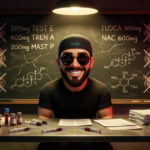

The strategic use of beta-blockers like atenolol during rest days or deload periods is not mere curiosity—it is a core survival protocol that every rookie stepping onto the battlefield must understand as if their life depends on it.
Beta-blockers are not simple pills; they are shields that precisely target and block adrenaline receptors in your body. These targets are divided into alpha and beta receptors, with beta receptors further classified into Beta-1, Beta-2, and Beta-3. Using them without understanding their roles and dangers is digging your own grave.
Beta-1 is the primary culprit that drastically increases heart rate when the sympathetic nervous system runs wild, tearing your heart apart. Beta-2 is stationed in the lungs and bronchi, potentially causing fainting during posing due to oxygen deprivation. Beta-3, involved with fat cells, has a different strategic significance on the battlefield, making Beta-1 the primary target you must aim for first.
This weapon was originally developed to prevent the hearts of arrhythmia patients from exploding on the verge of overload, but its true significance revealed over the past decade is that adrenaline surges cause chronic inflammation, which ultimately ages and sickens the body.
Brief sympathetic nervous system activation can be beneficial, but being in full-throttle mode 24/7 corrodes the body.
The data is merciless. Not only in cardiac surgery patients, but also in patients undergoing completely different surgeries, preventive administration of beta-blockers dramatically reduced mortality. The same effect was observed in cases of burns, traumatic brain injury, football player impacts, boxer concussions, and spinal cord injuries.
The reason is that beta-blockers suppress the inflammatory storm.
Even the moment you tear muscle fibers with iron, your body perceives it as an injury state similar to surgery. Without a shield, inflammatory cytokines like IL-6 run rampant, causing recovery to collapse.
Beta-blockers are the frontline defense suppressing that inflammatory hell, and in practice, they are utilized for other purposes as well.
Snipers use them to control hand tremors, public speakers to eliminate stage fright, and those with anger management issues to calm explosive impulses. However, the trace left in the brain depends on whether they are lipophilic or hydrophilic and their selectivity.

Lipophilic ones penetrate the brain directly and shake it whole, with propranolol being a prime example. Atenolol is hydrophilic, limiting brain penetration and minimizing CNS side effects. Metoprolol has high Beta-1 selectivity but is highly lipophilic, affecting the brain as well.
In terms of selectivity, propranolol attacks both Beta-1 and Beta-2 indiscriminately, even blocking bronchodilation, which can cause asthma patients to suffocate. Atenolol specializes in Beta-1, targeting the heart focusedly and stably. Nebivolol precisely targets Beta-1 while stimulating Beta-3 to produce nitric oxide, lowering resting heart rate while minimizing performance degradation during exercise. However, if eNOS becomes uncoupled, oxidative stress explodes, damaging DNA, making antioxidant stack use essential.

Using beta-blockers comes with a rebound effect: insulin sensitivity decreases, fatty acid oxidation reduces, and glucose utilization increases, turning off the fat-burning engine.
Long-term high-dose users cannot avoid weight gain and fluid retention, making pre-season strategic calculation essential.
Some have used low-dose atenolol since long ago to control hand tremors, but the real reason to use this drug now is to deliberately lower heart rate on rest days to promote long-term heart preservation.
Persistent activation of Beta-1 receptors causes cardiac hypertrophy. Therefore, using drugs to lower resting heart rate to protect an already enlarged heart is not a simple choice but a mechanical necessity for survival.
The body of a bodybuilder running a steroid cycle is a 24/7 battlefield: the sympathetic nervous system is at full throttle, and inflammation is a sea of fire.
The idea of “using beta-blockers only on rest days” is the thinking of an ignorant fool who doesn’t understand tactics. Those who truly risk their lives to step on stage administer beta-blockers twice a day with a precise protocol.
If funds and knowledge are sufficient, using a nebivolol and antioxidant combo stack to suppress oxidative stress while minimizing performance degradation is an essential shield for long-term survival.
This is not about recovery on off days; it is a necessary weapon to protect the heart enlarged by anabolic steroids and control chronic inflammation. If you don’t engrave this truth into your bones, your heart will abandon and leave your body before you even step on stage.
Based on the experience of a coach formerly at the IFBB Pro level, this strategy is a core protocol that goes beyond simple heart rate control to manage inflammation and oxidative stress, provide long-term heart protection, and maximize the overall efficiency of the entire steroid cycle.
In reality, high-level bodybirds administer nebivolol at least twice daily throughout the season, with precise dosage and timing during rest and after high-intensity training. They implement a practical strategy to minimize heart and cellular damage by combining it with an antioxidant stack including Omega-3, Vitamin E, Quercetin, Resveratrol, and other flavonoids that support cellular protection and nitric oxide balance.