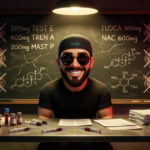

Open your ears wide.
What I’m about to tell you is not some diagnosis sheet recited by weak-willed doctors.
This is a survival doctrine, forged in the red fires of hell by the blood of the sole survivors—those who willingly swallowed the poison, climbed over countless piles of corpses, and reached the pinnacle of bodybuilding.
It is not a mere listing of cliché information scattered on the internet, but the very record of the冷酷battlefield that can only be acquired through real-world experience.
Before entering the battle, you must start by completely discarding the sweet delusions filling your head.
The very moment you dump a single oral steroid pill with a 17-alpha-alkylated structure down your throat, you must engrave deep into your bones that perfect, pristine liver health is nothing but a blazing desert mirage you will never encounter again.
Because whether it’s the legendary Superdrol, the classic Dianabol, or the so-called latest technology SARM, the fundamental mechanism by which they systematically fuck up your headquarters—the liver—is essentially the same.
This vicious assault on the liver splits into two main paths.
At the end of the first path waits the most heinous enemy, hepatocellular carcinoma, while the second path is a course commonly encountered these days, starting with a quiet infiltration called Non-Alcoholic Fatty Liver Disease (NAFLD), progressing through a state of engagement called Non-Alcoholic Steatohepatitis (NASH), leaving irreversible scars known as liver fibrosis, and ultimately leading to complete capitulation: cirrhosis, where the liver is just covered in scar tissue.
There are fools who destroy themselves with stupid tricks even before the battle begins.
They dissolve drugs in DMSO solvent and smear it on their skin to avoid first-pass metabolism, or let bitter pills dissolve under their tongue, or even perform the insane act of turning oral powders into injectables by dissolving them in unknown chemical solvents.
Remember this clearly.
That is blatant suicide—trying to slightly avoid the saturation hitting the liver by pumping unknown garbage into your own blood vessels.
What about aqueous suspension injections?
They will be greeted by necrosis, where the injection site rots away, and extreme pain (PIP) that will make you taste hell.
Thinking that such shallow tricks will reduce the total burden on the liver is the biggest misconception of an inexperienced amateur; on the contrary, it only increases the total burden the liver must bear during second-pass metabolism.
Of course, even in this chaotic battlefield, there are definitely wise cards with strategic value.
It is the mark of a wise commander to utilize special forces like RAD-140 or Exemestane that leave almost no scars on the liver, or to keep excellent staff like Aromatase Inhibitors (AI) or 5-alpha-reductase inhibitors nearby, which optimally create an anabolic environment in enemy territory without harming our own troops.
Do not forget that this entire doctrine applies without exception, and completely equally, to the new recruits using SARMs as well.
Are you still lounging in the complacent thought that the hepatotoxicity data for SARMs isn’t perfectly sorted out yet?
You should recall once more the bloody history of how old-school prohormones like Superdrol mercilessly shattered livers.
Blasting your liver enzyme levels like fireworks, all for the greed of gaining a few more strips of muscle, is the most foolish and stupid act in this game.
Now, let the official briefing begin.
First, you must accurately understand what our headquarters, the liver, that we must protect, really is.
The liver is absolutely not just a simple detoxification organ.
It is the very heart that oversees all supply and strategy on the battlefield.
First, the liver is the command center that directs fat metabolism.
During cutting operations, it acts as a key supply base, converting broken-down long-chain triglycerides for burning in the incinerators called mitochondria.
If this command center is destroyed by enemy attack, the supply lines will be completely cut off, and the broken-down fat, unable to be burned, will accumulate in the body, collapsing our forces from within.
Second, the liver is a sturdy gatekeeper controlling glucose.
The ultimate decision-maker on whether supplied carbohydrates are stored as glycogen in our ally, muscle, or go straight to the enemy, abdominal fat cells, is the liver.
The moment this crucial gate fails, every carbohydrate you shovel in after training will rush straight to the fat cells, only strengthening the enemy’s forces.
Third, the liver is a massive factory that synthesizes protein.
It produces key strategic materials like HDL, LDL, SHBG, CRP, and Albumin, which dictate the entire system of our forces.
A healthy liver is like a trophy of victory, guaranteeing high HDL, low LDL, and low SHBG levels meaning more free testosterone.
Now that you understand the importance of headquarters, it’s time to build a peacetime defense posture, turning the base itself into a fortress before the real battle.

This is the basic defensive posture that must always be maintained, regardless of engagement status, i.e., whether on cycle or not.
Our first strategy is to target not the external enemy, but the internal traitor: iron.
The start of the protocol is always iron management; you must reduce iron intake from your diet and remove accumulated iron from your body as much as possible.
The key weapon used here is phlebotomy.
It is already a proven fact, backed by data, that blood iron levels, particularly ferritin, are directly linked to the onset of fatty liver.
The second strategy is to deploy an elite unit to clean the fat accumulating in the liver: Choline.
Load your diet with sufficient choline.
A component called Phosphatidylcholine plays an essential role in removing fat from the liver, so a choline deficiency will inevitably lead to fatty liver.
This is old intel already reported from the battlefield in the early 90s.
The third strategy is to utilize a hidden shield that blocks enemy attacks: Zinc.
Zinc doesn’t just have simple antioxidant effects.
It lowers the internal enemy, ferritin levels, and even reduces liver fibrosis, the hardening of the liver.
What’s fibrosis?
It’s the path where collagen builds up in the liver, leading towards complete defeat: cirrhosis.
Make sure to pack this shield securely.
The fourth and final strategy is to guard against the enemy infiltrating the fortress walls: Endotoxin (LPS).
High-intensity training and high-calorie diets inevitably loosen the gut barrier, and the endotoxin that seeps through this gap reaches the liver, triggering a terrible inflammatory storm.
Therefore, to strengthen the barrier itself, you must place L-Glutamine, probiotics, and fiber—the battlefield cleaners I’ll emphasize again later—at the very top of your supply list.
Once the peacetime defense posture is perfectly established, it’s now time for real combat.
I will impart the special defense protocol to protect the headquarters during the period of oral compound use, the wartime situation.
The 1st Defense Line is to control the flow of bile and actively utilize fiber.

The liver produces about 600ml of bile daily to sweep cholesterol, waste, and drug residues into the intestines, but the real problem is that 95% of this bile is reabsorbed back into the liver via enterohepatic circulation.
The first shield to block this stupid act of bringing the toxins you worked hard to expel back into the house is fiber.
Fiber acts like a sponge, adsorbing bile acids and toxins and dragging them completely out of the body with the stool.
Aim for a minimum of 38g per day, and 50g to 75g if you are an elite soldier.
This is not an option; it is an obligation for survival.
And here is the ultimate weapon that can turn the tide on this defense line: TUDCA and UDCA.
In terms of pure milligram-for-milligram potency, TUDCA is undoubtedly superior, but if you mindlessly slam TUDCA without any strategy, it will deplete the bile acid pool, causing a counterproductive effect with serious impairment to fat digestion and fat-soluble vitamin absorption.
That’s why battle-hardened veterans use a high-level tactic called the TUDCA Rhythm.
It basically follows a cycle of a 2-week ON period taking TUDCA, and a 1-week OFF period for rest.
During the 2 weeks of using high-dose TUDCA, you double the supply of essential fatty acids and fat-soluble vitamins A, D, E, and K compared to usual, to prevent depletion of the bile acid pool.
Then, during the following 1-week off period, you completely stop TUDCA and temporarily replace it with UDCA, employing a strategy that gives the liver sufficient rest while maintaining smooth bile flow.
The dosage to administer varies fluidly depending on the intensity of the current cycle; 500mg per day may be sufficient for a light Anavar cycle, but when facing an extremely toxic enemy like Oxymetholone or Superdrol, you must increase the dose to 1,000mg, up to a maximum of 2,000mg per day.
The 2nd Defense Line is to completely block the path of re-infiltration by the expelled enemy.
The liver inactivates steroids by attaching a label called glucuronide and excretes them, but a traitor enzyme in the gut called beta-glucuronidase cleverly removes this label from the steroid just before excretion, causing the problem of sending it back into the bloodstream.
The secret weapon to sever this unnecessary recycling loop is Calcium D-Glucarate.
The renowned chemical coach, Broderick Chavez, advises that to destroy this mechanism, the effect is maximized when taking 30g of hydrolyzed casein along with 1,000mg to 2,000mg of Calcium D-Glucarate.
This is because casein powerfully stimulates bile secretion, while simultaneously, the glucarate fundamentally blocks reabsorption, creating a perfect synergy.
The 3rd Defense Line is to deploy the ultimate shield, the alpha and omega of all these defense strategies: the Glutathione corps.
NAC (N-Acetylcysteine), the most efficient precursor to glutathione, may become difficult to supply due to regulations, so it is wise for a commander to stockpile as much as possible while it’s available.
Glutathione is like the frontline infantry that directly eliminates reactive oxygen species, preventing the explosion of ALT and AST levels, which are indicators of hepatocyte destruction.
When you add its antioxidant network comrades, Vitamin C and Vitamin E, to the mix, the defense line becomes an impregnable fortress.
If the TUDCA explained earlier is the wise commander preventing stress-induced hepatocyte suicide (apoptosis), then Glutathione is the elite CBRN unit purifying the poison gas spread across the battlefield.
Therefore, in any oral compound cycle, the ultimate defense stack is the combination of TUDCA and Glutathione (or its precursor NAC), along with Vitamin C and Vitamin E.
If the NAC supply is cut off, you should consider oral reduced Glutathione or the more reliably effective injectable form as a backup plan.
Adding SAM-e at around 400mg to 800mg on top of this can also be an excellent choice.
Even after the core defense lines are established, to increase the win rate on the battlefield, you must deploy additional reinforcements: the antioxidant special forces.
Their role is to directly target the reactive oxygen species, the main culprits of liver damage, or to erect defensive barriers.
The first reinforcement is Melatonin.
This is not just a sleep inducer.
In terms of antioxidant capacity per milligram, it is more powerful than Vitamin C or E, and even stronger than glutathione, the liver’s primary antioxidant.
It possesses formidable firepower that annihilates not only Reactive Oxygen Species (ROS) but also Reactive Nitrogen Species (RNS), and it boosts the body’s Glutathione (GSH) levels.
The second is Turmeric (Curcuminoids).
That yellow component in curry not only protects the liver but also has kidney-protective effects, giving you two benefits for the price of one.
The third is Vitamin E.
This is one of the few methods proven effective in treating Non-Alcoholic Steatohepatitis (NASH), so its value is already proven.
The fourth is Coenzyme Q10, specifically recommending the Ubiquinol form.
It’s a well-researched veteran known for its liver-protective effects in Hepatitis C patients.
The fifth is Alpha Lipoic Acid (ALA).
It has anti-fibrotic effects, reducing the progression of fibrosis in the liver, and also plays a role in protecting the liver from choline deficiency.
The sixth is Quercetin.
This phenolic compound from plants is also known to have liver-protective effects and has many other additional benefits, so there’s no harm in taking it.

But let me give one warning here.
On the battlefield, there are placebos that look like allies but are actually useless.
Products like Milk Thistle, better known as Silymarin, or Liv.52, are exactly that.
They are only somewhat meaningful in studies on alcoholic fatty liver, and have almost no effect against the direct liver damage caused by 17-alpha-alkylated oral steroids.
In some cases, they can even exhibit anti-androgenic effects, acting like trolls that hinder muscle growth.
Of course, if you feel psychologically uneasy even after taking all the core troops mentioned earlier, I won’t stop you from taking them.
But the very moment you over-rely on these as the core means of liver protection, your liver is as good as dead on the battlefield.
While the battle rages, we must constantly check the status of our forces through reconnaissance reports: blood tests.
If the report shows elevated bilirubin levels, this is a serious warning sign that bile flow is blocked, and it’s time to immediately increase the TUDCA dosage or consider introducing Calcium D-Glucarate.
Rising ALT and AST levels indicate the destruction of liver cells, but AST can also rise due to muscle damage, so it must be cross-checked with CPK (Creatine Kinase) levels.
If CPK levels are within the normal range but only ALT and Gamma-GT (GGT) levels are selectively high, that is clear evidence of liver damage.
If the GGT level remains stably low, you can take it as clear proof that the defense line we built is working very effectively.
To get accurate reconnaissance results, you must stop all training at least 48 hours before the test, and it is an ironclad rule to have blood drawn in a morning fasting state.
True masters perfectly control the intensity of training and the composition of their diet to be exactly the same starting 3 days before the test, minimizing all variables that could affect the results at the source.
Now, concluding all briefings, I issue the final operation plan and code of conduct.
First, the basic supply stack to be performed daily.
You must maintain a minimum of 38 grams, with a target of 50 to 75 grams, of fiber, which is key for adsorbing and excreting intestinal toxins.
Also, deploy the lipotropic trio that aids the liver’s fat metabolism: Choline 3,000mg, Inositol 3,000mg, Methionine 1,500mg, and for overall health and antioxidants, consistently take Vitamin D3 5,000 IU, Vitamin C 2,000mg, Vitamin E 400 IU, and Zinc 25mg.
Next is the fire support stack to be added during the period of oral compound use.
Start with a minimum of 500mg of TUDCA and increase up to 2,000mg as needed based on cycle intensity, but always remember the TUDCA Rhythm explained earlier.
For the Glutathione stack, choose one method: either 2,000mg of NAC, or 1,000mg of oral reduced Glutathione, or 200mg of injectable Glutathione, administered 1 hour before taking the oral compound; and for additional defense enhancement, consider adding SAM-e at 400 to 800mg.
Finally, the stack for when special operations are needed.
If you want to maximize detoxification capability, use 1,000 to 2,000mg of Calcium D-Glucarate concurrently with 30g of hydrolyzed casein; and for gut barrier strengthening, utilizing L-Glutamine and probiotics is a wise choice.
Do not make the mistake of a rookie with no experience by starting with a full stack, full dose from the first day of the cycle.
Masters usually have a loading period over 3 to 4 days, gradually increasing the dosage, giving the liver sufficient time to adapt to the new environment.
The same applies when stopping the cycle.
Rather than stopping abruptly, tapering off the dose gradually can mitigate the rebound phenomenon where liver enzyme levels skyrocket.
How long you can use oral compounds is not determined by the dates on the calendar, but solely by the blood test and abdominal ultrasound reports.
If even a single warning signal appears on that report, you must stop everything immediately.
No further excuses are needed.
That glamorous stage you want to stand on will undoubtedly be there next year, and the year after that.
But remember this.
Your liver is not.