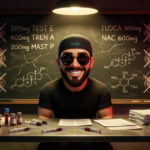

The theme of this engagement is a survival strategy between the double-edged sword known as Raloxifene and the shadow of death called blood clots.
I issue this declaration of war to those who mistakenly believe high-dose Raloxifene is a magical essence that will eternally vanish that shameful gynecomastia tissue from their chests.
To maximize the efficacy of Raloxifene while minimizing risk, estrogen management throughout the cycle must be absolute.
When executing a high-dose Raloxifene protocol, an aromatase inhibitor must be utilized to keep circulating estrogen levels at rock bottom.
Only then can Raloxifene effectively occupy the target receptors.
This is not mere suppression; it is a strategy to secure a definitive advantage in receptor competition.

However, at the same time, I saw the terror of blood clots—a time bomb embedded in the veins—leading me to terminate this experiment immediately and crush any foolish expectations.
To those who know absolutely nothing and swallow Raloxifene like candy based on community rumors: carve this field report into your brain before you suddenly find yourself suffocating to death from a pulmonary embolism.

The core of this battlefield lies in the strategy of surviving by using a high-dose Raloxifene “special ops unit” to clear the wreckage of gyno left behind by unidentified drug toxicity and prolactin spikes.
This operation was designed as a calculated 12-week lethal timeline from start to finish.
The first 8 weeks were a diversionary phase, deploying 60mg of Raloxifene daily into the venous frontlines to shake the enemy formation and establish a foothold for receptor occupancy. The following 4 weeks were designed as the decisive battle phase, focusing an extreme firepower of 120mg daily to destroy the gyno tissue strongholds and purge the battlefield.
The backdrop of this entire operation was literal hell.
After suffering toxic attacks from external drugs of unknown origin, the chosen testosterone, nandrolone, and decisively, trenbolone, triggered a prolactin catastrophe within the body. The result was the indelible mark of hideous gynecomastia tissue on the chest.
In this theater of war, Raloxifene was not just a drug; it was a silent commando force that forcibly seized and blocked the estrogen receptors—the enemy’s primary supply line.
The reason for cranking that firepower up to the limit of 120mg per day was a sheer will to burn down and clear the contaminated battlefield once and for all.

The decisive factors in managing blood clot risk are hydration and blood viscosity management.
During a high-dose Raloxifene phase, one must consume at least 7 liters of purified water daily to keep the blood thin.
Simultaneously, potassium supplementation must be implemented to counteract the high sodium issues common in bodybuilding diets, preventing cramps caused by electrolyte imbalances.
Monitoring blood viscosity requires more than just a D-dimer test; regular plasma viscosity and erythrocyte aggregation tests are necessary for an accurate risk assessment.
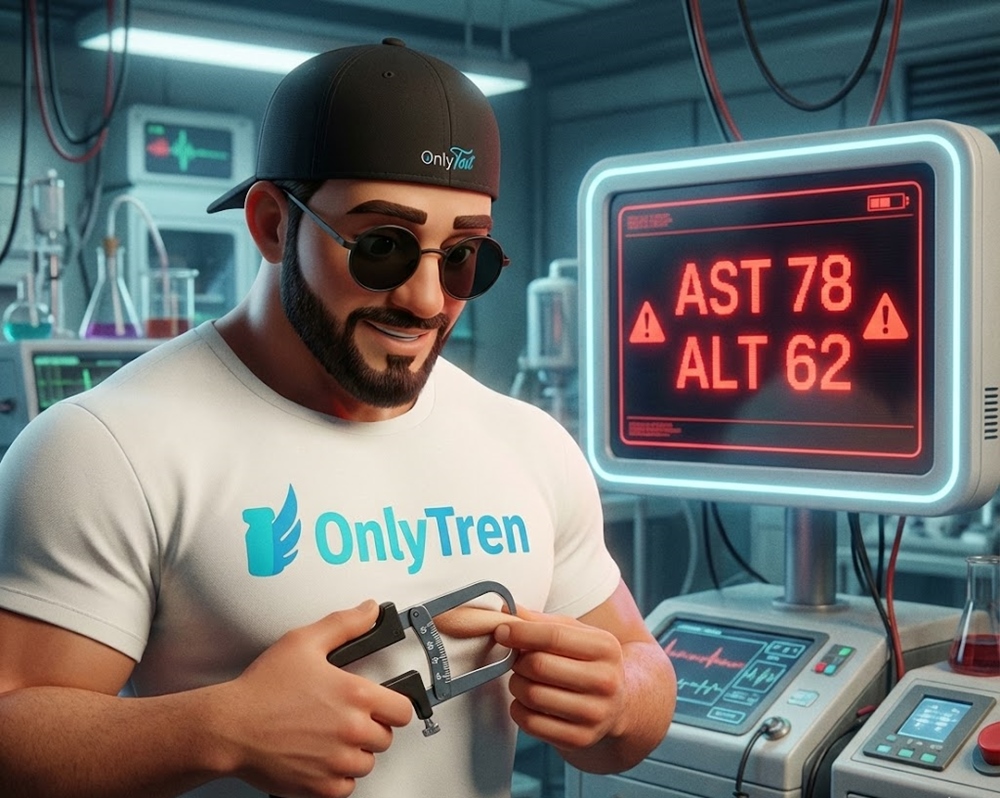
The actual engagement began with caliper readings of 21mm on the right and 17mm on the left. Forty-eight hours after administration, receptor occupancy commenced, and the unpleasant pressure around the chest began to shift subtly.
Since Raloxifene is fat-soluble, it must be taken with high-fat meals to maximize absorption.
However, this simultaneously increases the hepatic load, making the choice of liver support supplements critical during high-dose administration.
Rather than standard supplements like TUDCA or Silymarin, intravenous Phosphatidylcholine therapy, which aids in actual hepatocyte regeneration, should be considered to maintain stable liver enzymes throughout the latter half of the protocol.
At week 8, upon confirming stagnant progress with a reduction to 18mm on the right and 15mm on the left at the 60mg dose, I immediately amplified the dosage to 120mg.
Seventy-two hours after the 120mg deployment, physiological feedback began as the drug interacted with estrogen receptors in the liver, disrupting blood clotting factors. After 96 hours, I felt the stubborn fat at the bottom of the chest burning away, bringing the lean texture of the upper body to an extreme peak.
After 12 weeks, the final numbers were 12mm on the right and 11mm on the left—a tactical success that annihilated exactly half of the tissue compared to the start—but the price was severe.
Blood work revealed liver enzymes screaming, with AST exploding from 45 to 78 and ALT from 40 to 62. IGF-1 levels plummeted to 110, gnawing away at the body’s recovery capacity from the foundation up.
Since the mechanism of high-dose Raloxifene suppressing IGF-1 is through reduced production in the liver, exogenous insulin or incretin-class drugs must be used strategically during this period to independently maintain intramuscular IGF-1 signaling.
This is the only way to prevent a decline in recovery capacity.
This isn’t just about muscle preservation; it is a core strategy to reduce the risk of ligament damage caused by the weakening of connective tissue that can occur during high-dose steroid use.
Specifically, the risk of thrombosis confirmed through D-dimer levels and coagulation tests signaled that I had reached a critical threshold where I was gambling my life for the sake of bodybuilding aesthetics. I decided to stop this dangerous gamble for survival.

Raloxifene showed a completely different dynamic compared to the 20mg or 40mg Tamoxifen tactics previously used to sharpen lower body lines.
It prioritized targeting upper body fat, demonstrating the prowess to make the reality of gyno tissue stand out more clearly.
The unpleasant sensation of tissue pushing through shirts diminished, but every time the outlines of old tissue hidden within the fat were revealed, I felt the bitter limits of the drug illusion and sneered at myself in the mirror.
If you insist on forcing this experiment, you must consult a hematologist and undergo genetic analysis to check for thrombotic genes.
Bear in mind the truth: a bodybuilder who has lost their health is nothing more than a breathing heap of meat.
Ultimately, you must accept the fact that fibrotic tissue cannot be removed with drugs.
The high-dose Raloxifene protocol should be viewed as a pre-surgical preparation process.
By shrinking the tissue as much as possible with drugs before surgery, the surgeon can perform a more precise excision and minimize scarring.
This is the complete concept of true “Chemical Assisted Surgery.”
In the end, if you want aesthetic perfection, there is only one answer.
You must accept the reality that surgery—entrusting your body to a top-tier surgeon specializing in female breast reconstruction—is the only final blow that remains.
A temporary withdrawal from the battlefield and a period where muscle and condition deteriorate post-surgery are unavoidable. However, if you have a proven recovery system already validated through cycles, that degree of muscle loss is only a matter of time. You will not hesitate to pull your condition back up and return to the frontlines.
This is not emotion; it is philosophy. It is a declaration that only those who perfectly master the body’s systems, rather than just building the body, can control the battlefield.
The 120mg Raloxifene “sweet spot” certainly provides powerful firepower, but it cannot completely eliminate old tissue.
If you desire perfection beyond that, you must break free from the illusion of drugs; getting on the operating table is the only way to reclaim a true man’s chest.
All of this must be executed only under cold judgment based on data, without a single cent of emotion involved.
Face the reality where endocrinologists recommend thyroid ultrasounds after seeing a bodybuilder’s TSH levels. Design your battlefield by mathematically calculating values, timing, and physiological feedback.
Even amidst conflicting social signals—hearing people say you smell like gear or having family members point out your face looks bloated at dinner—you must first establish an unshakable control system.
A week after stopping Raloxifene, the moment I felt the density returning and performance reviving in the gym, I decisively cleared out all orals that were burdening my liver and declared a return to normal values.
The moment you cling to drugs without mastering the system, the initiative shifts immediately to the drugs. Only precise data and cold-blooded strategy will allow you to escape the shadow of danger and remain a true powerhouse.
Avoid the amateurish judgment of pushing Tren until your AST hits 148 and your girlfriend tells you your body smells weird before finally backing off.
Manage everything, down to calculating benzyl alcohol concentrations for injection pain, and have the coldness to retreat the instant thrombotic markers waver. That is what ultimately determines survival.
The 50% reduction in tissue confirmed during this 12-week engagement left a sense of certainty, but it also stands as a valuable field record that imprinted why physiological limits and the choice of surgery are inevitable.
Do not wish for luck any longer.
The battlefield is honest, and data does not lie.
If you want to tear away the shame embedded in your chest, borrow the firepower of high-dose Raloxifene, but terminate the operation before the Reaper of blood clots puts a blade to your throat, and entrust yourself to the man with the scalpel.
This is a chapter of the chemical battlefield and the survival blueprint you must read to stay alive.