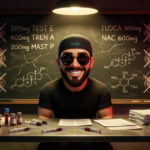

The reason many bodybuilders fail on stage isn’t a lack of training; it’s the biochemical terror caused by the oils they inject into their bodies.
When they see ampoules stamped with terms like “Pharma” or “Pharmaceuticals,” they treat them like holy water endorsed by the FDA. The reality is far grimmer.
The idea that drugs like Trenbolone or Masteron are distributed as “pharmaceutical grade” is a contradiction in itself.
These substances had their FDA approvals revoked long ago.
They are merely tactical supplies manufactured in the regulatory blind spots of low-income nations under the guise of “export only.”
Countless ignorant bodybuilders see their hs-CRP (High-Sensitivity C-Reactive Protein) levels skyrocket past 10 mg/L and their joints rot to the point of needing Lidocaine cream before leg day, yet they blame the heavy weights.
This isn’t a joint issue; it’s a systemic inflammatory response triggered by the oil injected into their systems.
We must pinpoint one clear causal relationship:
Impure Solvent Injection → Systemic Inflammation → Recovery Energy Shifted to Defense Mechanisms → Hypertrophy Failure.
If you don’t understand this fatal cycle, you will stay stuck in place forever.
This report dissects the reality of “copycat” products masquerading as pharmaceutical companies—luring you into a crucible of inflammation—and serves as a verification protocol to distinguish real weapons from total junk.
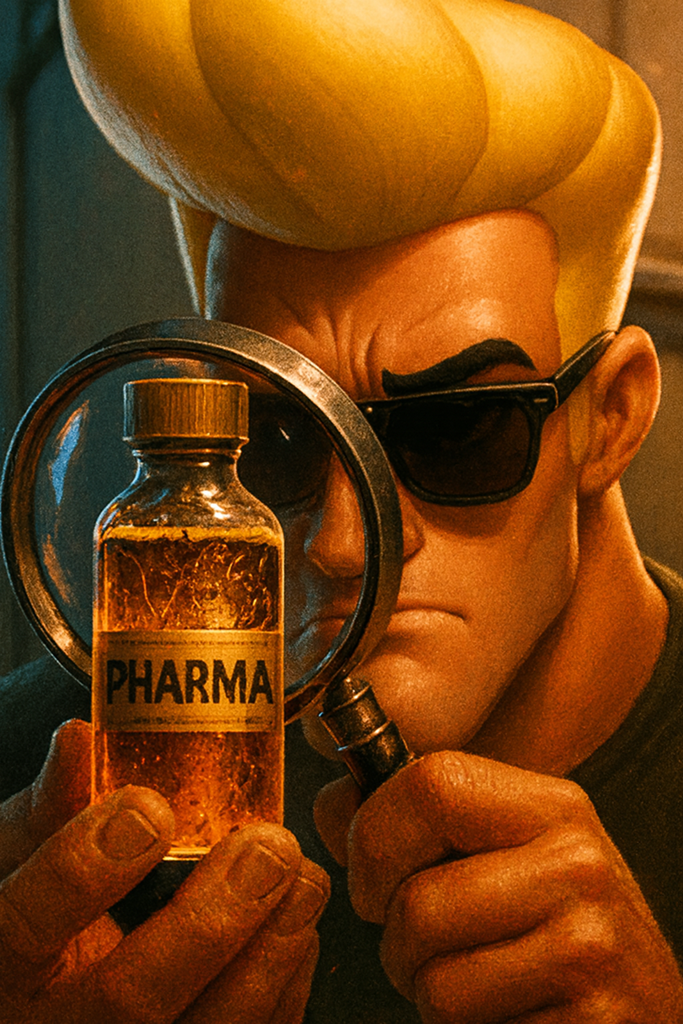
In this theater of war, the drug is the special forces operator striking enemy lines, while the carrier oil and solvent are the transport aircraft.
If the aircraft explodes before landing, the mission is over.
We classify suppliers into three tiers based on quality and level of control.
Tier 1: Legitimate pharmaceutical products from developed nations.
These are officially approved by major regulatory bodies like the FDA (e.g., Pfizer, Bayer) and supplied through legitimate networks like hospitals and pharmacies.
Every aspect—from raw ingredients to manufacturing and lot tracking—is strictly controlled.
Tier 2: A gray zone containing a mix of Chinese copycats and small-scale Indian manufacturers with inconsistent quality control.
This category goes beyond unofficial products; it encompasses everything from production lines in India that evade oversight to counterfeit or semi-counterfeit medicines leaking into legitimate supply chains.
They look like real pharma, but the source of raw materials is murky, and manufacturing consistency is notoriously poor.
Tier 3: Commonly known as Underground Labs (UGL).
These are unofficial products manufactured and distributed entirely outside the legitimate pharmaceutical system.

Tier 2 is the most dangerous zone—the gray area where Chinese copycats, low-quality Indian manufacturers, and fake “Pharma” brands are indistinguishable.
The essence of Tier 2 is a structure that looks official but takes zero accountability.
These products are often systematically neglected in India or flow through the cracks of the legitimate market as fake or semi-fake medicines.
Oversight is purely superficial.
They feign trust with holograms, QR codes, and brochures, but the word “Pharma” on the box is nothing more than camouflage.
The true danger of Tier 2 is hidden in the ingredient list under the phrase “Excipients q.s.” This essentially means they have no obligation to disclose—nor any intention to take responsibility for—the oils and solvents used.
In other words, it’s a declaration that they “threw in whatever was deemed necessary.”
The user has no way of knowing if it contains peach seed oil, tea tree oil, or high-potency synthetic solvents used to force solubility.
The moment these substances from the gray zone—products with murky origins and broken manufacturing standards—enter your body, your immune system flags them as foreign invaders.
An immediate defensive response is launched, and the user pays the ultimate price.

Consider the case of “Chul-soo.”
Entering his contest prep, he sourced “EvoXXXs Tren” from India.
The packaging was flawless.
The hologram sparkled, and the serial number checked out on the website.
Believing it was the real deal, Chul-soo pinned 1cc into his glute.
[Immediate Post-Injection ~ 24 Hours: Incubation & Manifestation]
Immediately after the injection, Chul-soo noticed a strange chemical taste in his mouth.
It wasn’t the familiar sting of Benzyl Alcohol; it was a foul taste, as if he had swallowed industrial cleaner.
A few hours later, he developed “Test Flu” symptoms—fever and chills. His body recognized the mystery solvent as a virus and cranked up the temperature in an immune counter-attack.
[48 Hours ~ 72 Hours: Systemic Impact]
The injection site became red and swollen (PIP), and the pain surpassed simple muscle soreness.
His joints were hit harder. While walking down stairs for leg training, he felt a localized, agonizing pain in his knees.
Despite not hitting heavy weights, his elbows and knees throbbed.
He eventually resorted to numbing cream just to train.
Blood work showed his hs-CRP levels at 12 mg/L (normal is below 1.0).
This is inflammation on the level of an acute infection.
[Tactical Outcome: Mission Failure]
Chul-soo’s body wasted the energy meant for muscle protein synthesis on detoxifying toxic solvents (likely Ethyl Oleate) and fighting inflammation.
Cortisol spiked; insulin sensitivity tanked.
He used what looked like a perfect pharmaceutical product but actually dumped a load of industrial-grade solvent into his bloodstream.
His failure wasn’t a lack of effort—it was a tactical defeat, succumbing to the inflammatory response triggered by the unverified solvents of a Tier 2 product.

We do not trust labels. We operate on the premise of immediate, field-executable physical verification protocols.
The core of this protocol isn’t just technique—it’s the realization that “the physical properties of a substance are more honest about their effect on your blood than the words printed on a label.”
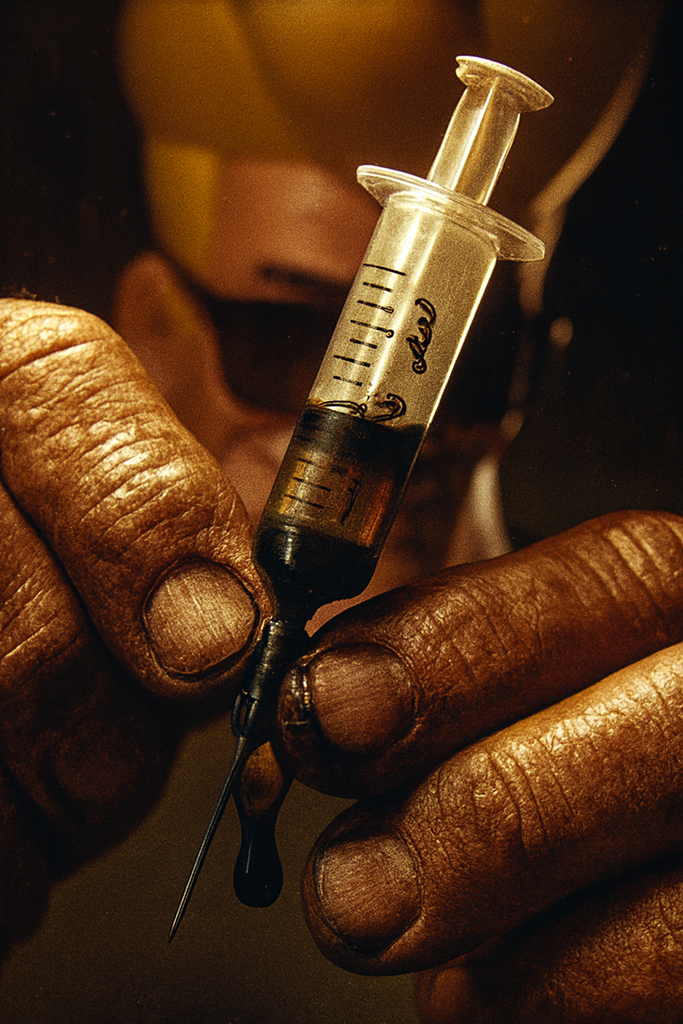
The first method is the Ink Dissolution Test.
It is the most intuitive field test.
Extract a small amount of oil and rub it over the ink markings on an insulin or standard syringe.
The readout is simple:
if the ink dissolves instantly, the solution contains synthetic solvents powerful enough to melt plastic-surface ink.
Ask yourself if you want that in your veins.
If you hesitate for even a second, discard the product immediately.
The second stage is the Taste Test. Dab a tiny drop of oil on your tongue to check the flavor and scent.
A normal result is a slight alcohol tang (Benzyl Alcohol) or a neutral peanut/oil taste.
In this case, it passes the baseline.
Conversely, if you detect a chemical stench, a smell reminiscent of burnt tires, or a foul taste that triggers an immediate gag reflex, it’s a sign of cheap synthetic solvents.
Trash it without a second thought.
The ultimate optimization strategy lies in transparency.
Often, a reputable “Major UGL” is a better choice than a fake pharma brand.
These labs are frequently upfront about their ingredients, stating things like, “We use Cottonseed Oil and zero Ethyl Oleate (EO).”
When a label only shows “Excipients q.s.,” it is a red alert that the manufacturer either refuses to disclose their additives or is using uncontrolled substances.
The word “Pharma” in a brand name is not an indicator of trust.
Many unregulated products abuse this term to masquerade as legitimate companies.
The key isn’t the name or the box; it’s the specific manufacturing facility info, the existence of a legitimate COA (Certificate of Analysis), and a long-standing, verified reputation within the user community.

“Drugs build the body, but impurities destroy it.”
Systemic inflammation is the ultimate enemy of hypertrophy.
No matter how perfect your training and diet are, if your body is busy fighting internal toxins, your muscles won’t grow.
A true expert controls the purity of the solvents entering their body before they ever think about increasing the dosage.
Don’t let a shiny hologram trick you into pinning trash. Doubt, verify, and if you aren’t certain—throw it away.